
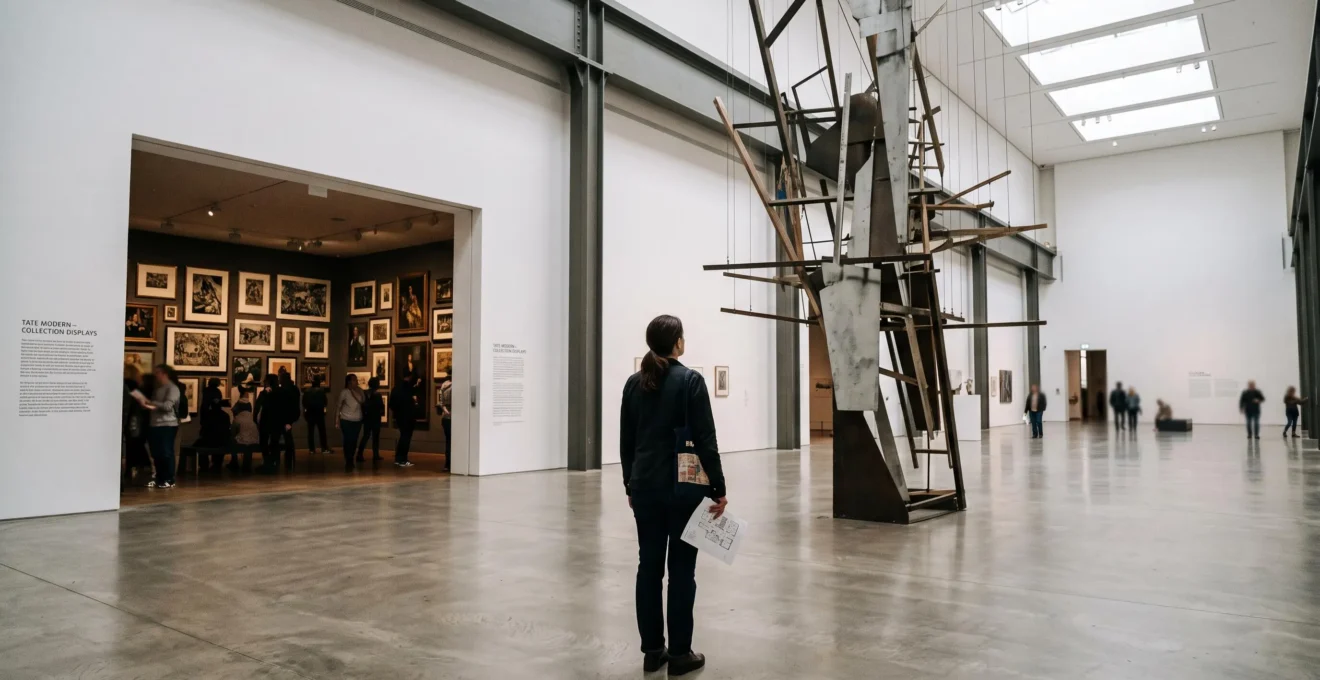
Two hours in a contemporary art museum can feel like a brilliant introduction or an exhausting march past works you barely remember. Equally, spending your entire visit in one exhibition wing can leave you with a richer understanding of an artist—or wondering what else you missed.
The difference is rarely just the museum’s reputation. It is how its exhibitions, layout, crowds and interpretive approach match what you want from the day. A visitor hoping to encounter unfamiliar art may thrive on variety; someone interested in understanding a particular movement may prefer fewer rooms and more time with each work.
For UK visitors choosing between a major London institution and a regional contemporary space, the practical question is not simply where to go. It is how much attention to spend, which displays deserve it and when to stop. A good museum visit has a purpose, a manageable route and permission to leave things unseen.
Choosing your contemporary art museum experience
- Choose two hours of highlights when you want an introduction, visual variety or a flexible cultural stop without committing to one exhibition.
- Choose one deep-dive wing when an artist, theme or medium genuinely interests you and you enjoy exploring context rather than covering ground.
- Plan around your attention by identifying one essential room, checking current displays and allowing time for a break.
- Why Can One Contemporary Museum Feel Inspiring While Another Feels Exhausting After 90 Minutes?
- How to Plan a Contemporary Museum Visit So You Don’t Burn Out Before the Best Room?
- Which Gives More Value: A Big-Name London Museum or a Smaller UK Contemporary Space With Fewer Crowds?
- The Speed-Run Mistake That Makes Contemporary Museums Feel Pointless
- In What Order Should You Do a Contemporary Museum Day: Blockbuster First or After a Break?
- Which Works Better: Following the Exhibition Route Exactly or Skipping to the Middle First?
- Why Do Museums Rotate Collections So Often That Your Favourite Work ‘Disappears’?
- Which Gives More Variety Over 12 Months: Revisiting One Museum’s Rotations or Visiting 3 Different UK Museums?
Why Can One Contemporary Museum Feel Inspiring While Another Feels Exhausting After 90 Minutes?
One contemporary museum can feel inspiring because its exhibitions match the way you prefer to explore art, while another can feel exhausting because its density, scale or sensory environment demands more attention than you expected. Ninety minutes is not a universal limit. Your response depends on the displays, your interests and the conditions of that particular visit.
Museum fatigue is more complicated than simply becoming tired of looking. Stephen Bitgood‘s critical review of museum fatigue in Visitor Studies distinguishes changes in visitor attention from physical exhaustion and examines influences including information overload and competition between exhibits. It also cautions against assuming that every decline in attention proves fatigue.
Contemporary art can create several different kinds of demand. A densely hung gallery may require repeated decisions about which work deserves attention and whether to read its accompanying text. A large installation may offer fewer individual objects yet demand more walking, viewing from different positions or adjustment to an unfamiliar environment.
Neither format is inherently more tiring than traditional painting galleries. The relevant issue is the relationship between the exhibition’s demands and the visitor’s expectations.
Imagine two hypothetical visits. In the first, a visitor enters a tightly curated exhibition where each room develops a clear argument. In the second, the same visitor explores an open-plan display mixing sculpture, film and painting. Someone who enjoys following an argument may prefer the first; someone who enjoys spontaneous discovery may favour the second.
Ask yourself: do you want a story or an encounter? A story-oriented visitor may appreciate an exhibition with a clear sequence. An encounter-oriented visitor may feel more engaged by moving freely between striking works.
There is also the sensory environment. Sound installations, overlapping video soundtracks, school groups and queues can make an otherwise interesting exhibition difficult to concentrate on. A prominent institution may contain quieter areas, while a smaller venue can still be noisy during a busy event.
Before deciding that a museum is not for you, consider whether the problem was its content, the exhibition format or simply the way you approached the visit. That distinction makes the next visit much easier to design.
How to Plan a Contemporary Museum Visit So You Don’t Burn Out Before the Best Room?
Plan your visit around one essential work or exhibition room rather than starting at the entrance and hoping to reach it eventually. Put that priority near the middle of your intended route, check the floor plan for demanding sections and reserve a break before your attention drops. Treat the timetable as flexible, not as a race to complete every gallery.
The common instinct to save the best room until last can backfire. By then, you may have spent your attention reading introductory panels, navigating crowds or watching works that were not central to your reason for visiting.
Instead, identify an anchor room: the exhibition space you would most regret missing. Build your route backwards from that point, leaving enough time to arrive interested rather than depleted.
For a hypothetical two-hour visit, that might mean a short introductory selection, your chosen room, a seated break and a final stretch of optional galleries. The sequence is an example of how to organise priorities, not a scientifically established visiting timetable.
Before leaving home, spend ten minutes looking at the museum website. A floor plan can reveal whether the exhibition spreads across several levels, whether film works need uninterrupted viewing and where you might find seating. Current exhibition pages help establish which displays are actually available.
Think of your concentration as an energy budget. Spend it deliberately. You might bypass a crowded introductory gallery, begin on an upper floor where a suitable route is available, or leave a film room until you have the time to watch it properly. These are options, not guarantees that a particular floor will be quieter.
Do not treat a café as the only possible recovery point. A bench, a quiet circulation area or a short pause outside a gallery can provide a useful interruption. What matters is including that pause before you feel compelled to rush.
Your 10-minute pre-visit planning checklist
- Open the current exhibitions page and write down the single display you most want to see. Deliverable: one named priority.
- Check the available floor plan and identify its location. Deliverable: the room or floor marked on your route.
- Look for film rooms, installations and unusually extensive displays. Deliverable: a note of the sections that may need extra time.
- Identify a possible seating area or break point, confirming its availability where possible. Deliverable: one planned recovery stop.
- Choose the rooms you are willing to miss if your attention fades. Deliverable: a short optional list rather than an obligation to complete everything.
A successful route protects the room that matters while leaving space for unexpected discoveries. Once you know how to manage the visit, the next question is whether a famous museum or a smaller contemporary venue offers the better match.
Which Gives More Value: A Big-Name London Museum or a Smaller UK Contemporary Space With Fewer Crowds?
A major London museum often suits visitors seeking a broad introduction, recognised works and several artistic approaches in one outing. A smaller UK contemporary space may suit visitors seeking a focused exhibition or a more manageable visit. Neither automatically provides better value or fewer crowds. The stronger choice is the venue whose current programme best matches your interests, budget and travel plans.
Prestige is a poor substitute for checking what will actually be on display. A major museum can have an extensive collection while showing only a portion of it. A smaller institution may have a focused temporary exhibition that gives you more of what you came to experience.
For instance, Leeds Art Gallery‘s exhibitions and collection displays describe a programme combining modern and contemporary art with temporary exhibitions. Its published information identifies different gallery spaces and exhibition periods, helping visitors select a specific reason to go.
That does not establish that Leeds is quieter, better value or more focused than a particular London institution on any given day. Those assessments depend on the programme and conditions of the visit.
A useful comparison looks beyond the museum’s name:
| Decision factor | Major London institution | Smaller UK contemporary space |
|---|---|---|
| First encounter | May offer a wider introduction to artists, periods and media. | May offer a focused introduction through a particular exhibition. |
| Artist or theme depth | Depends on the current exhibition and collection display. | Can be particularly attractive when the programme centres on your chosen subject. |
| Crowds | Popular exhibitions may involve substantial visitor traffic. | Potentially easier to navigate, but quiet conditions are not guaranteed. |
| Exhibition changes | Check which collection rooms and temporary shows are available. | Check programme dates and whether the main galleries are changing over. |
| Entry costs | Some collection displays are free; special exhibitions may be ticketed. | Admission policies vary, including free, donation-based and ticketed models. |
| Travel commitment | Convenient when already visiting London. | May require a dedicated trip or work well as part of a regional visit. |
Another useful example is Dundee Contemporary Arts‘ exhibition programme, which publishes upcoming exhibitions, artists and event information. It allows visitors to decide whether a particular show justifies travelling before committing to the journey.
Calculate value by fit, not fame. Consider travel time, admission arrangements and how much of the programme genuinely interests you. Free entry can reduce the financial risk of an exploratory visit, but even a free museum costs time and energy to reach.
Likewise, a ticketed exhibition can offer excellent personal value if it closely matches your interests. Check its content and availability before booking rather than assuming a ticket price indicates quality.
One disappointing visit also tells you little about a museum’s long-term value. Displays and exhibitions change, so a venue that misses your interests now may offer something more compelling later. The more immediate danger is attempting to compensate for that uncertainty by seeing everything at once.
The Speed-Run Mistake That Makes Contemporary Museums Feel Pointless
The speed-run mistake is treating a contemporary art museum like a checklist of rooms to complete. Moving quickly can help when you want highlights, but rushing every work equally leaves little opportunity to notice materials, consider context or form a personal response. A better highlights visit is selective: pass over some works, pause at others and give a few your full attention.
Speed-running is especially unhelpful when an exhibition asks visitors to connect artworks through an argument, an artist’s working process or a historical context. Looking briefly at every object may produce broad exposure without much understanding.
There is an important distinction between moving efficiently and looking superficially. You can travel quickly between rooms while still slowing down deliberately at the works you choose.
Research revisiting Arthur Melton‘s historical gallery-density experiment illustrates why viewing everything is not a realistic assumption. In a study involving galleries containing between six and 36 paintings, the proportion of paintings viewed decreased as the number displayed increased, while average viewing time per painting remained constant. These historical results concern paintings, not modern multimedia installations, and do not establish an ideal pace for today’s visitors.
The useful lesson is narrower: increasing the available material does not mean visitors will proportionately increase what they examine.
Try a three-tier approach within each room:
- Skim: Scan the room and its introductory text to understand what is being shown.
- Glance: Look briefly at works that catch your interest without committing to every label.
- Dwell: Select one or two works worth investigating through sustained looking, contextual reading or a change of viewpoint.
Make the initial decision during your first minute in the room, then adjust if something unexpected catches your attention. This is a practical sorting technique, not a prescribed museum rule.
For example, you might enter a room containing several paintings and one film installation. If you have limited time, you could glance at the paintings, choose one for closer attention and decide whether the film deserves a longer stop. The choice depends on your interests rather than an obligation to allocate equal time.
The deeper problem with constant rushing is the judgement it can produce afterwards: « I didn’t get anything from that. » Sometimes the exhibition genuinely does not connect with a visitor. Sometimes the visit simply offered too little time for a connection to develop.
Set a room limit before you begin. If you reach that limit having explored several compelling works, leaving is a legitimate success. Completion is not the measure of a worthwhile museum visit.
That approach also helps when visiting more than one venue: instead of trying to extract everything from both, decide which exhibition deserves your best concentration and arrange the day accordingly.
In What Order Should You Do a Contemporary Museum Day: Blockbuster First or After a Break?
Visit the blockbuster first when it is your main priority, has demanding ticket arrangements or is likely to require your freshest attention. Place it after a break when you want to begin with something lighter and can reach the exhibition without becoming tired beforehand. The best order depends on the available timed-entry slot, the intensity of each venue and your reason for visiting.
A headline exhibition may involve timed tickets, extensive interpretation, long viewing sequences or considerable visitor traffic. Booking it first protects that commitment from delays elsewhere in the day.
The trade-off is that a stimulating or noisy opening exhibition can leave quieter galleries feeling comparatively subdued. If you want an energetic introduction followed by unhurried reflection, that contrast may be desirable. If you prefer to build towards the day’s main experience, it may feel premature.
Consider two possible sequences:
| Consideration | Blockbuster first | Blockbuster after a break |
|---|---|---|
| Main advantage | Protects your priority exhibition while attention is fresh. | Allows anticipation to build and separates the main show from earlier activities. |
| Main risk | The first exhibition may reduce enthusiasm for subsequent displays. | Travel or a demanding first venue may leave less energy than expected. |
| Best fit | Visitors with one essential booking or a strong interest in the headline show. | Visitors planning a lighter opening visit and a substantial recovery break. |
| Practical constraint | Requires a suitable early ticket slot. | Requires a suitable later slot and reliable transfer time. |
Think about contrast rather than merely chronology. Following a dense exhibition with a quieter collection display may allow you to look more freely, without continuing to process an extended curatorial argument.
Reversing that order can work for visitors who prefer to begin with open-ended exploration and reserve sustained concentration for the main exhibition.
The decisive question is which venue receives your freshest attention. A timed-entry booking may settle the order before your preferences do. Check the actual slot available before planning other stops around an imaginary ideal schedule.
Place lunch or another meaningful break between contrasting venues when practical. A break immediately before the day’s main exhibition can be useful, but it cannot entirely reverse the demands of an overly ambitious morning.
Even with the venues arranged carefully, your experience inside an exhibition depends on another choice: whether to respect its suggested route or go directly to the rooms that interest you most.
Which Works Better: Following the Exhibition Route Exactly or Skipping to the Middle First?
Follow the exhibition route when its rooms build a chronological story or develop an argument that depends on earlier material. Skip towards the middle when the display is organised into relatively independent themes and visitor circulation allows it. For a highlights visit, flexible routing can save attention; for a deep dive, the intended sequence may be part of what makes the exhibition meaningful.
Not every suggested route serves the same purpose. Some exhibitions introduce an artist’s early work before showing later developments. Others divide a collection into themes that visitors can approach in different orders.
There may also be a practical circulation route intended to guide visitors through a space. It should not automatically be confused with a curatorial argument. However, the distinction is not always obvious from the entrance.
Use the first room as a test. Read the introductory panel and ask whether the exhibition seems to be telling a developing story.
If later rooms depend on information established earlier, following the sequence is likely to offer greater coherence. If each room presents a largely self-contained theme, you may have more freedom to choose your direction.
For example, an exhibition tracing an artist’s changing methods across a career may lose important context if you jump straight to the final phase. A display organised into independent themes such as material, landscape and identity may be easier to explore selectively.
The skip-to-the-middle tactic can help when entry rooms are crowded and the gallery permits alternative routes. Moving to a less busy room may make it easier to concentrate on a particular work.
But do not assume you can always bypass the beginning. Ticketed exhibitions may operate one-way routes, restrict re-entry to previous rooms or have staff-managed circulation. Follow the venue’s arrangements.
Where backtracking is permitted, consider returning to the introductory room later. That can restore missing context without requiring you to begin in a crowded space.
Highlights visitors often benefit from flexible routing because their goal is selective exposure. Deep-dive visitors may gain more from following the curator’s sequence, especially when the order makes the relationships between works intelligible.
Whichever approach you choose, remember that the exhibition available today may not be the same one you encounter next year. The changing nature of museum displays affects both short visits and long-term plans.
Why Do Museums Rotate Collections So Often That Your Favourite Work ‘Disappears’?
Museums rotate collection displays because artworks cannot always remain on view indefinitely. Conservation requirements, loans, exhibition programming and decisions about how to present collections can all move a work out of public display. Your favourite piece may be in storage, undergoing conservation or temporarily elsewhere. Before travelling specifically to see it, check its current display status with the museum.
Some materials are especially sensitive to prolonged exposure to light. Works on paper, photographs and textiles can require carefully managed display conditions, meaning continuous exhibition may not be appropriate for their preservation.
Rotation can also reflect a museum’s interpretive ambitions. Rehanging a collection allows curators to explore different relationships between artists, periods and subjects rather than presenting one permanent arrangement.
Loans and temporary exhibitions introduce further movement. A work may be borrowed by another institution, incorporated into a special exhibition or removed while an area is reconfigured.
Collection ownership does not guarantee current visibility. A museum website may list an artwork because it belongs to its collection even when visitors cannot see it in a gallery.
Before making a dedicated journey, look for a current display indicator on the artwork’s collection record. If the website does not establish whether the work is on view, contact the institution directly. Exhibition and collection pages can help, but they are not always a complete inventory of what is hanging on a particular day.
There is an important difference between a permanent collection and a permanent display. The former describes the works an institution holds; the latter describes a presentation that may itself change.
Temporary blockbusters add another layer of uncertainty because touring exhibitions and borrowed works move between venues. Smaller contemporary spaces can also change substantially between programmes, particularly when their galleries are devoted to temporary exhibitions.
Rotation need not be interpreted as losing access to art. A returning visitor may encounter a previously unseen work, notice a different curatorial relationship or reconsider a familiar object in a new setting.
That is why checking what is currently on display matters more than relying on an old photograph, review or personal memory of a gallery.
Once you accept that the same institution may offer different encounters over time, a useful longer-term decision emerges: should you keep returning to one familiar museum or spend your cultural budget exploring several?
What to remember before planning your next visits
- A familiar museum can offer new experiences through changing displays, but only if its current programme remains relevant to you.
- Visiting different institutions broadens your exposure to artists and curatorial approaches, although travel can reduce the time available for looking.
- The strongest annual plan may combine familiarity with occasional exploration rather than choosing one strategy exclusively.
Which Gives More Variety Over 12 Months: Revisiting One Museum’s Rotations or Visiting 3 Different UK Museums?
Visiting three different UK museums will usually offer broader exposure to institutions, collections and curatorial approaches. Revisiting one museum can provide deeper familiarity with its programme and reveal changes in how its collection is presented. If you visit frequently and live nearby, repetition may be more practical. If you visit occasionally and enjoy travelling, variety across venues may be more rewarding.
The choice involves two different kinds of cultural value: depth per pound and breadth per pound. Neither has a universal financial winner, because admission arrangements, transport costs and the exhibitions available vary widely.
Revisiting one museum allows you to build familiarity with its rooms, collection and curatorial preferences. You may begin to recognise relationships between works or notice what has changed after a redisplay.
Familiarity can also make a shorter visit easier. Once you understand a building’s layout, less effort may be spent navigating it and more attention can go towards the exhibition itself.
The limitation is that rotation does not guarantee substantial novelty on every return. Some displays change frequently; others remain in place for longer periods. Check programme dates rather than assuming every visit will be different.
Visiting three different institutions offers another kind of variety: different buildings, exhibition philosophies, artists and regional contexts. You gain a broader comparison of how contemporary art is presented in the UK.
However, visiting more museums does not guarantee that every artwork will be new to you. Travelling exhibitions, loans and overlapping collections can result in repeat encounters.
Use your likely visiting pattern to guide the decision:
| Your situation | Better starting strategy | Reason |
|---|---|---|
| You live close to a museum and can visit regularly. | Revisit the same institution. | Convenience supports shorter, more selective visits and familiarity with changing displays. |
| You rarely visit museums and enjoy cultural trips. | Explore different institutions. | Each journey can introduce a new programme and curatorial approach. |
| You are following a particular artist or medium. | Follow relevant exhibitions across venues. | The subject matters more than remaining loyal to one museum. |
| You want both familiarity and discovery. | Combine local revisits with occasional trips. | You retain a dependable base while widening your experience. |
A hypothetical annual plan might involve revisiting a nearby gallery when its displays change and arranging one or two trips to temporary exhibitions elsewhere. The precise frequency should depend on available time, accessibility, travel costs and genuine interest.
This hybrid approach also resolves the question of highlights versus deep dives. A short visit to a familiar museum is well suited to concentrated looking because you already know the space. An unfamiliar institution may encourage a broader highlights visit before deciding what deserves deeper attention.
You can also reverse the pattern: take a focused trip to a temporary exhibition and use your local museum for more spontaneous exploration. The essential principle is to choose the visiting style according to the purpose of each outing.
For your next contemporary art day, choose one museum, identify the work or exhibition that matters most and decide whether the experience calls for a highlights route or a single deep-dive wing. Check what is currently available, plan a comfortable stopping point and leave the rest optional. Across a year, repeat the approach wherever your interests lead rather than measuring success by the number of museums visited.
Is two hours enough for a contemporary art museum?
Two hours can be enough for a rewarding highlights visit when you choose a manageable number of rooms and accept that you will not see everything. It may be insufficient for an extensive temporary exhibition, especially one involving longer films or detailed interpretation. Check the programme and decide on your main priority before arriving.
Should beginners choose a highlights tour or a deep-dive exhibition?
Beginners without a specific interest may prefer highlights because they can sample different artists and media. Someone already fascinated by a subject may find a focused exhibition more satisfying. Prior knowledge is not essential for a deep dive; genuine curiosity and a willingness to spend time looking matter more.
Do you need to read every wall label to understand contemporary art?
No. Start by looking at the work and noticing what attracts or puzzles you. Read the introductory text or a specific label when context would help. Some exhibitions depend heavily on historical or thematic interpretation, while others leave greater room for open-ended responses. Choose the level of reading that supports your visit.
How can you check whether a particular artwork is on display?
Search the museum’s official collection records for the artwork and look for a current display location or on-view status. Check the exhibition programme as well. If the information is absent, unclear or particularly important to your trip, ask the museum directly before travelling. A work appearing in an online collection does not necessarily mean it is currently exhibited.
Is it worth visiting a contemporary art museum if you only have 45 minutes?
Yes, provided the venue’s access arrangements and layout make a short visit practical. Choose one room or a small selection of works, confirm any ticketing requirements and avoid spending the entire visit navigating the building. A focused 45-minute encounter can be worthwhile without trying to imitate a full museum tour.